
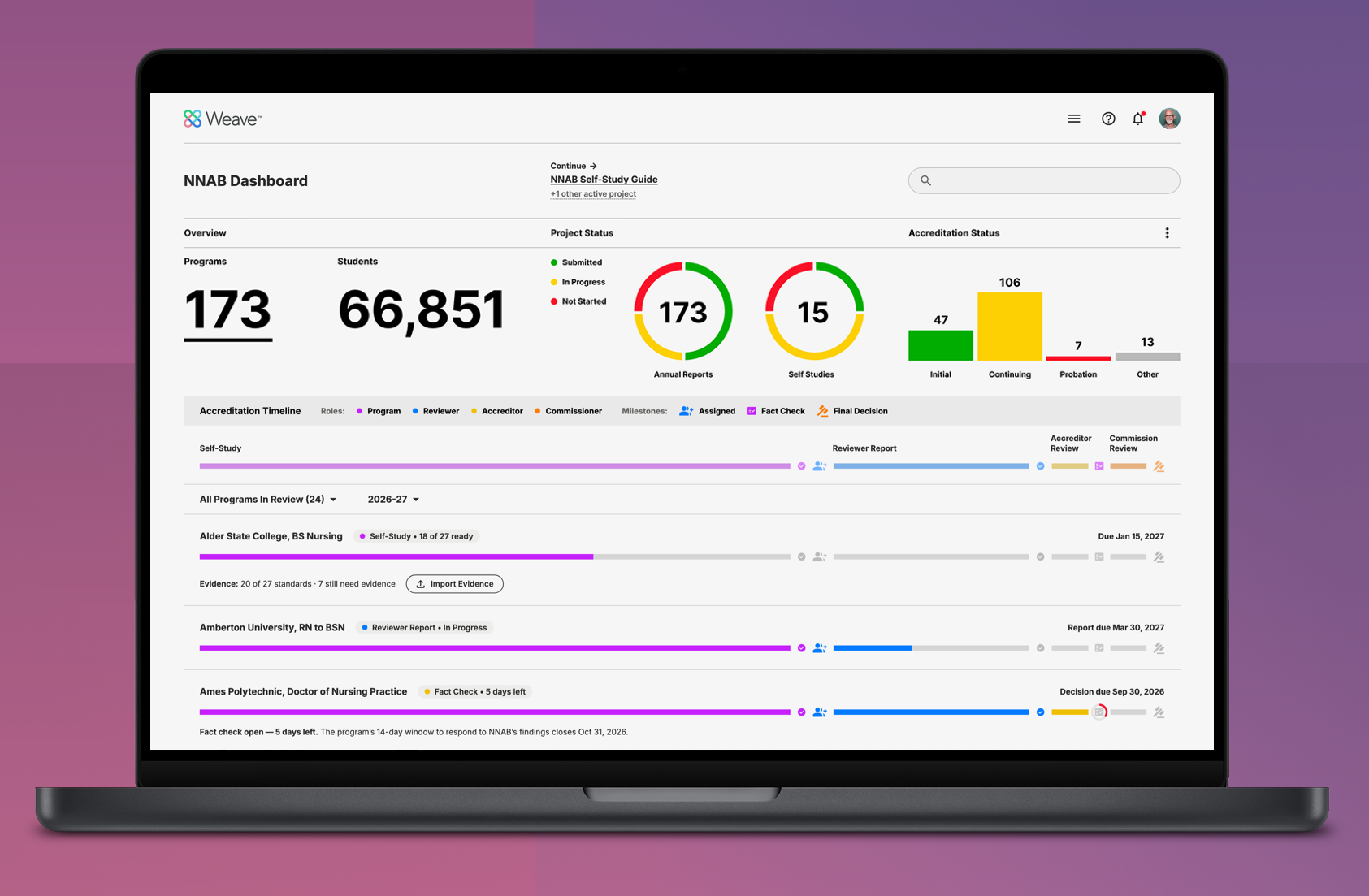
Accreditor Dashboard: Program, accreditor, and commission dashboards allow all stakeholders to quickly track accreditation progress and identify areas needing attention
Weave: Accreditation, Simplified
STAFF PRODUCT DESIGNER, 2019–2026
Creative Direction • Product Design (UI/UX) • System Design • Information Design
Weave is a tight-knit team of educators, administrators, and technologists building compliance software for higher education. As the creative lead, I directed the end-to-end design and user experience for Weave Accreditation.
DESIGN CHALLENGE
Accreditation is notoriously complex, rigid, and time-consuming—demanding strict orchestration between institutions, accreditors, and regulators. To solve this, I designed Weave Accreditation: a 360-degree platform that streamlines compliance from end to end by unifying visual progress tracking, collaborative drafting, and automated reporting into a single experience.

Designing the Accreditor Dashboard: I designed the accreditor's home base: every program at a glance, where each one sits in the review cycle, and how its outcomes compare with the benchmarks. The timeline tracks all 24 programs in review by stage and milestone, and one click on Continue returns the accreditor to their work in progress, here the NNAB Self-Study Guide.
Setting Up the Review
Before a program writes its self-study, the accreditor sets up the review. A template defines the standards the program is measured against, the instructions it follows, and the questions reviewers will answer.
Designing the Template Builder: I designed a template builder where accreditors set up each review standard by standard. They write instructions for the program, then drag in the blocks reviewers complete: narratives, short answers, checklists, ratings and evidence requests. Each block’s settings sit beside it, and a preview shows the review as the program or a reviewer will see it before it’s published.
The Program Report
Once the review is set up, the program under review writes its Program Report. Accreditation self-studies must prove clear missions, rigorous curricula, measured student success, qualified faculty, and continuous improvement.
Designing the Program Report Workspace: I designed the workspace where a program writes its self-study, standard by standard. Pages view lays the narrative out as it will print, so writers see the page breaks move while they type. A heat map across the top tracks every standard, and marking one Ready to Submit updates it.
Designing AI Evidence Sorting: I designed how Weave brings a program’s evidence in. AI reads a shared folder where the files already live and suggests a clear name and the standards each one supports, with a reason. A person makes the final call, filing the confident matches in one step. The workspace then shows which standards got files.
Accreditor Review
Accreditor review is a process in which external peers audit a program's self-study report, conduct an on-site verification visit, and recommend a final compliance decision to the commission.

The Accreditor Workspace: This interface streamlines the evaluation cycle by allowing the review team to assess individual program report criteria side-by-side, logging specific evidence and submitting official rulings directly to the commission without leaving the platform.
Final Decision Letter
The process concludes with the final decision letter, which delivers the official accreditation verdict, mandates required compliance fixes, and verifies eligibility for student licensure.
Designing the Decision Letter Builder: I designed the workspace where the accreditor writes the final decision letter beside the reports behind it. Findings, conditions and a Standard Ratings chart drop in at the cursor, and the letter lays out on letterhead pages as it will be sent. When it’s ready, the accreditor sends it to the program from the same screen.
Mobile
Accreditation work doesn’t only happen at a desk, so the self-study had to work on a phone too: one standard at a time, every status in view, and the team’s tools a thumb away.
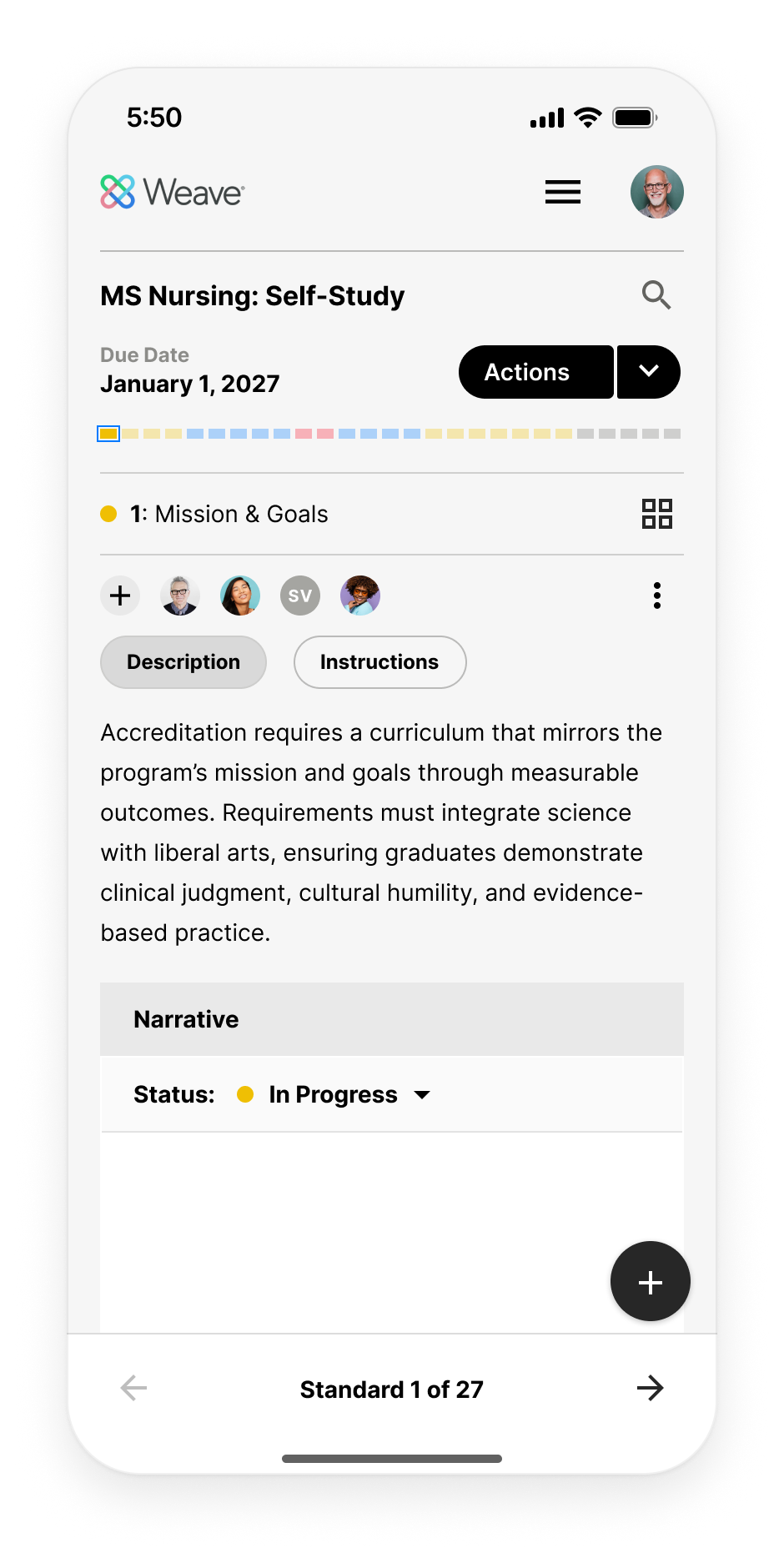
Overview: every standard’s status in one bar, with the due date always in view.
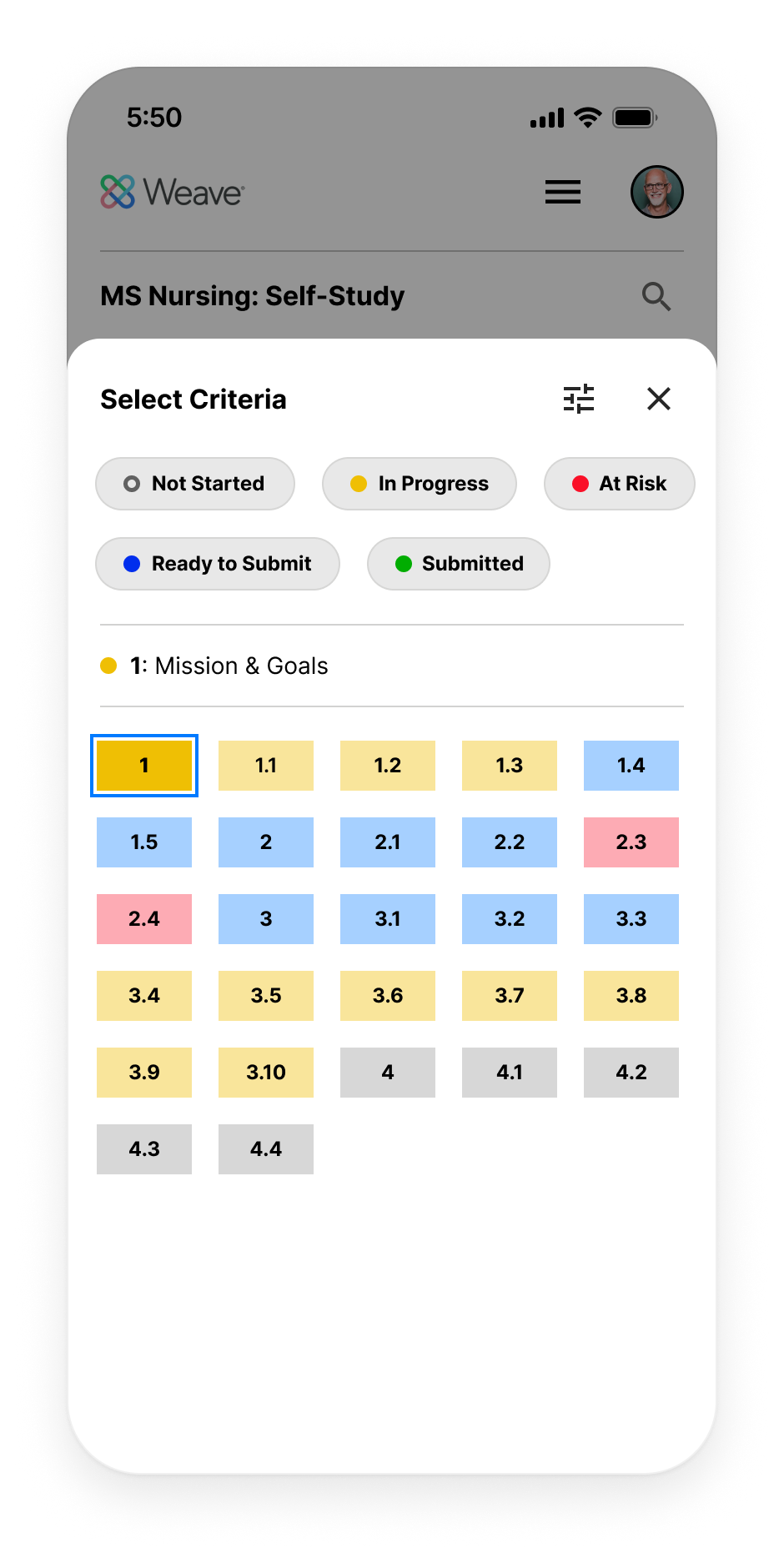
Standards: jump to any of the 27 standards. Colour shows where the work stands.
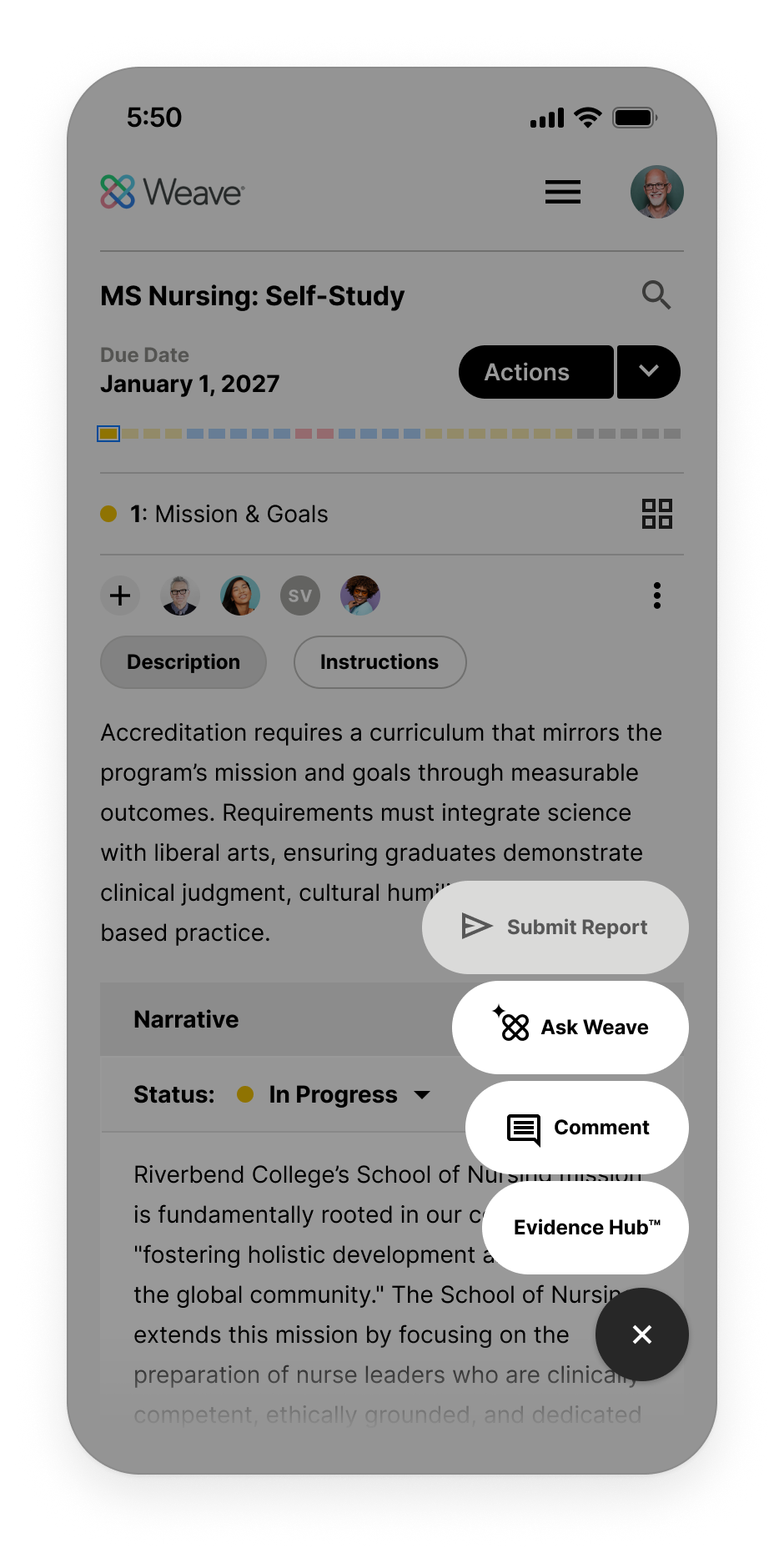
Actions: comment, ask Weave, pull in evidence or submit, all from one button.
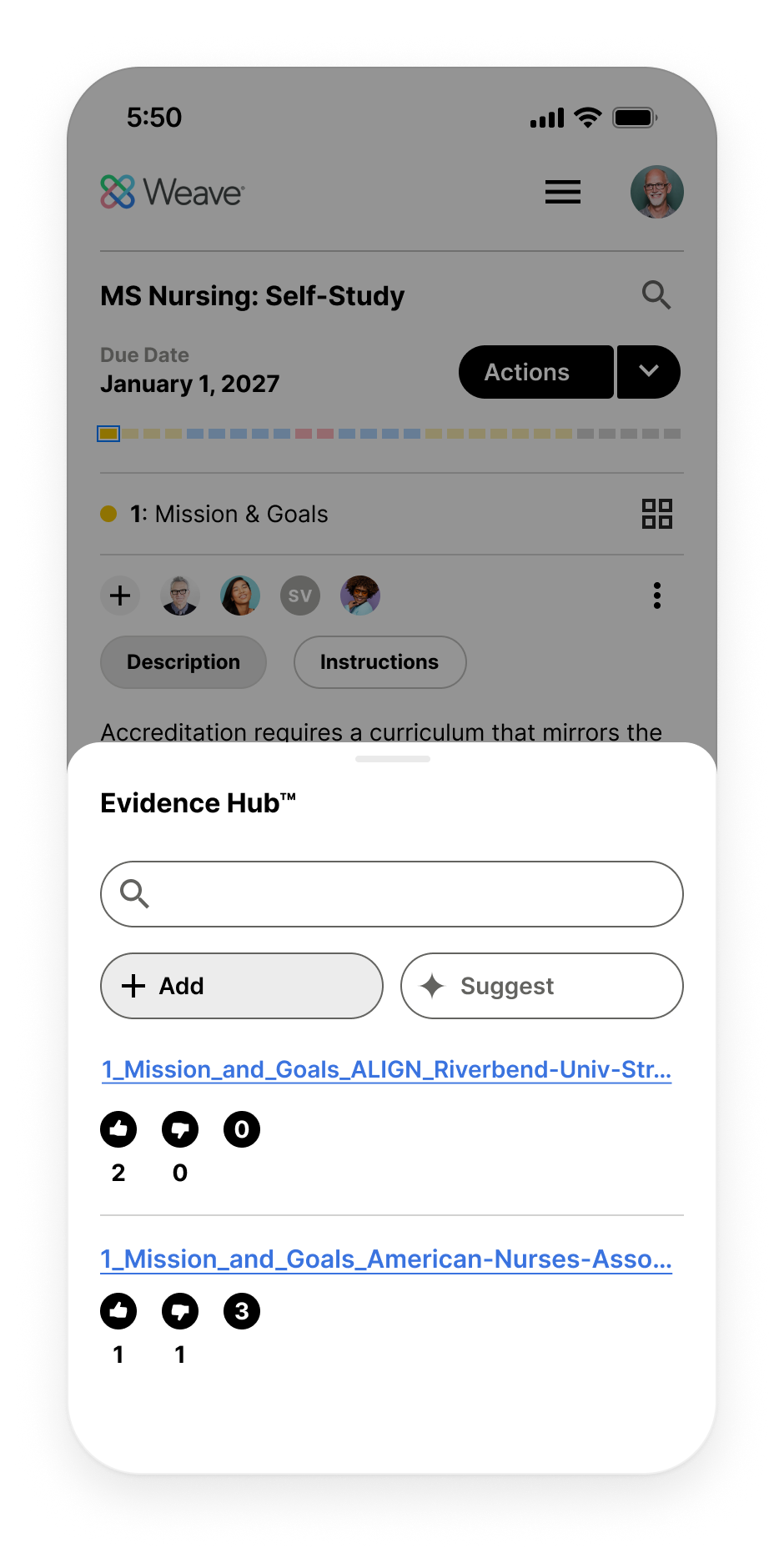
Evidence: add evidence, or let Weave suggest it. The team votes on what to use.
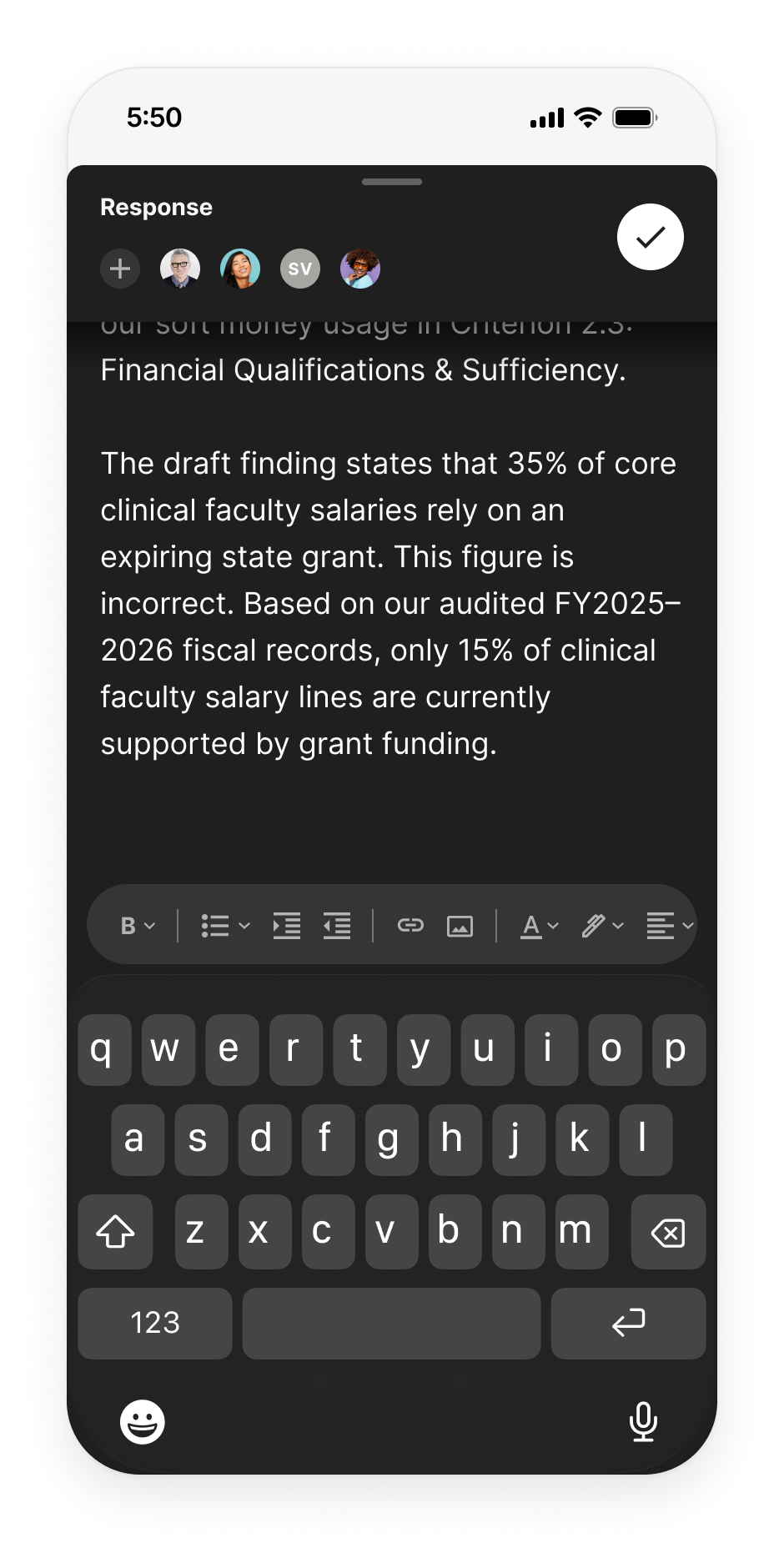
Writing: a focused writing mode for answering a reviewer’s findings.
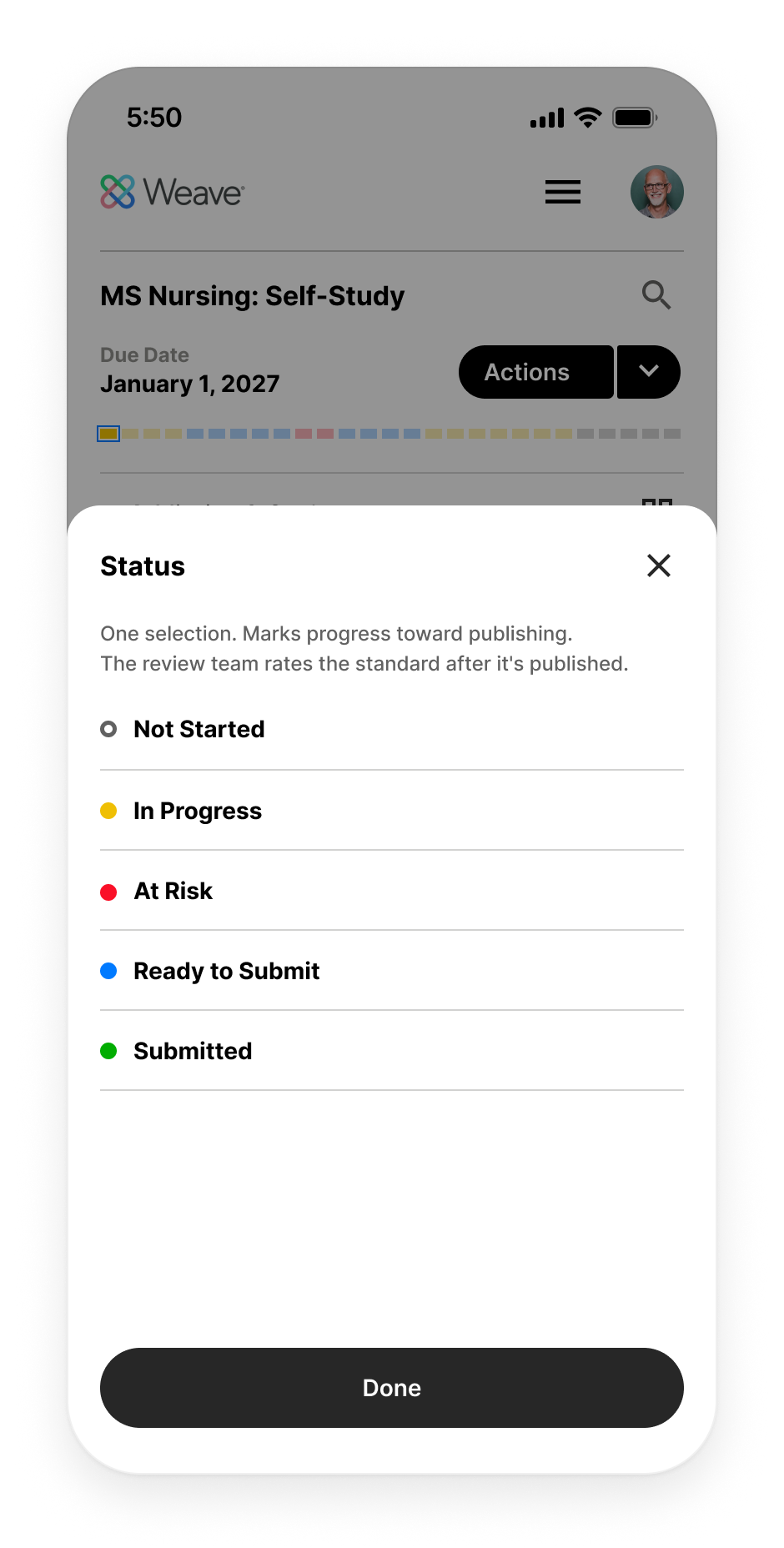
Status: set where a standard stands in one tap, with a plain note on what it means for the review.
For Weave, this platform represents a fundamental paradigm shift: one end-to-end home for an accreditation cycle that has always been fragmented. Institutions, program administrators, and accreditors have traditionally worked in disconnected silos, jumping between messy spreadsheets, isolated file repositories, and external communication channels.
By bridging internal institutional self-studies and external accreditor review cycles within a single, secure environment, Weave Accreditation consolidates a fractured, multi-year lifecycle into one unified digital experience.